88% of Users Never Return After a Bad App Experience. Here Is Why User-Centered Design Is the Fix
Millions of apps compete for consumer attention, but most never get a second look. When a full 88% of users abandon apps due to a poor user experience, the fix is obvious: User Centered Design principles (UCD). By focusing on improving this, developers, startup founders, product managers, and others find a way to engage their audience. LastApp.ai makes it possible to build successful apps that resonate with users and keep them engaged for the long-term.
Key Insights:
- After a bad experience with an app, 88% of users will not return. User centered design principles prevent the causes from the start.
- It costs 100x more to fix a finished app than it does to proactively change it during the design or development process. UCD speeds up issue discovery and iterations.
- Strong UX design boosts conversion rates up to 400% over poorly designed ones. This makes it a revenue, not an aesthetic decision.
- Research outweighs personal preference when building apps destined for commercial success.
- Users expect seamless, low-effort, and personal app experiences.
- Non-technical founders and solo entrepreneurs relying on no-code platforms can still focus on UCD with no coding knowledge needed.
What Is User-Centered Design (UCD)?
UCD focuses on the end user’s behaviors, goals, interests, and limitations at every stage of the development process. Ever since human-computer interaction began decades ago, researchers have studied and pushed more user-centric designs for tech. With the proliferation of mobile apps, it has become a standard methodology for meeting user and business goals more successfully. Limited screen space, on-the-go access, and higher personalization expectations fuel the need for UCD even more.
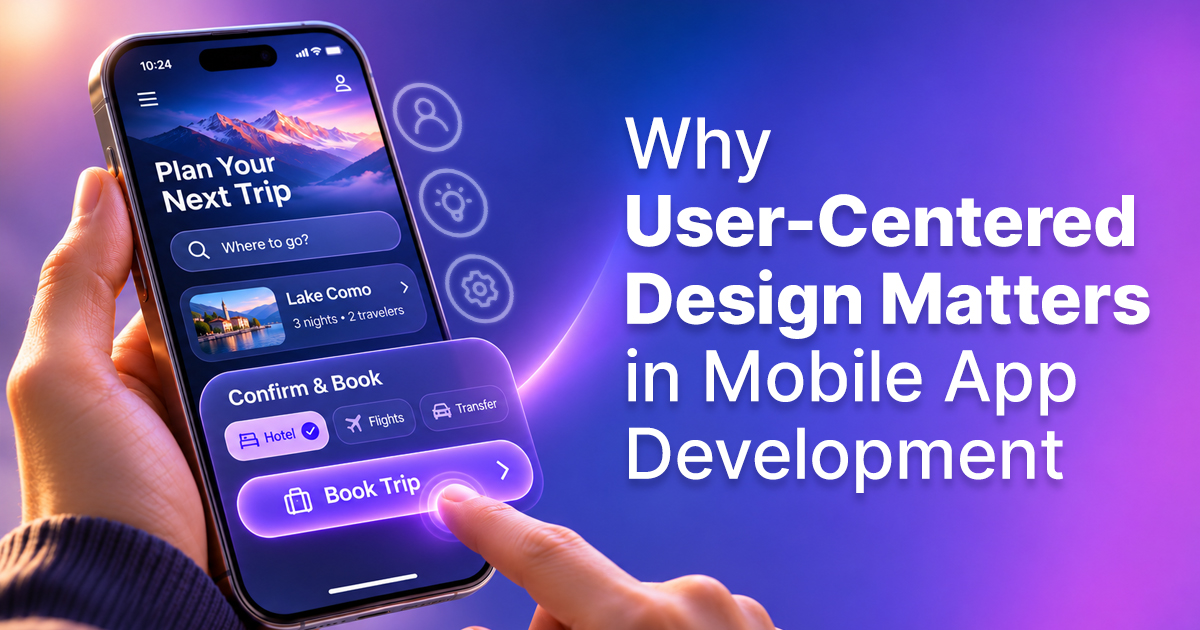
Why User-Centered Design Matters in Mobile App Development
UCD matters because it creates apps that prioritize user needs, works seamlessly with their behaviors, and exceeds expectations. Apps that focus on ease of use and personalization for individuals have improved conversion and retention rates.
App Users Expect Effortless Experiences
Industry leaders like TikTok, Uber, and Instagram set the standard for all other app usage. Users expect new ones to feel as comfortable and intuitive. They expect speed, too. More than 53% of mobile users abandon a site or app if it takes more than three seconds to load. What founders believe or want doesn’t matter. Focusing on user mental models throughout the development process matches use to expectations.
Retention is the Best Growth Metric to Focus On
Retaining existing users costs less than acquiring new ones. When average day-one retention hovers around 30% and only 10% of users remain after 30 days, it makes sense to focus on a frictionless system before launch. UCD does this by identifying potential issues before users can use them as a reason to leave.
Improved UX Boosts Revenue Directly
For every $1 you spend on UX development, you can return $100 in value. Such impressive ROIs cement the need for user-centered design. It removes barriers between your target audience and ongoing use and spending. It also encourages higher ratings, which places your app above competitors in the App Store, thus increasing downloads even more.
Development Wastes Less Time and Money
Early testing catches issues before they get bigger or become intrinsically tied to other elements of the app development process. Fixing them at that point can cost 100 times more and waste a lot of time better spent on more user-centric decisions or updates.
Differentiate Your App in Competitive Markets
More than 5 million apps exist in Google Play and the App Store. In such a crowded market, user experience outweighs all other considerations when it comes to both attracting and retaining users. People will appreciate the features but are more likely to rate and recommend apps based on how easy and enjoyable they are.
Expand Your Audience with Accessibility Features
According to the CDC, 26% of all adults in the United States live with a disability. Many of them need or appreciate various accessibility features when it comes to interacting with technology. Designing apps with this sector in mind not only takes ethical considerations into account, but is also a sound business decision.
The UCD Process Explained: How User-Centered Design Works
UCD is more than a one-time decision at the beginning of the development process. You must choose user-centric options throughout.
Step #1 Research Target Users
Understand who your target users are before development begins. Conduct user interviews, gather feedback, do behavioral observations, and build an ideal customer profile (ICP) first. Instead of guiding them toward desired answers, ask open-ended questions for more honest and complete information.
Step #2 Define User Problems or Paint Points
Identify user needs before deciding on features that will help them. This puts the focus on goals and removing obstacles that get in the way of satisfaction and retention.
Step #3 Map the User Journey
Describe the user’s journey step by step through the app before designing what the experience will look like. Wireframes work to design usability before visual elements.
Step #4 Prototype and Test
Test onboarding, navigation, account creation, and usage of all functions and features before signing off on them. While paper prototypes can work at early stages, no-code mockups bring the testers closer to the true experience.
Step #5 Iterate Based on Data
The more testers, the more data you have to use. Look for common issues and patterns as these are the ones you need to change before going forward. Individual comments or vague feelings do not require redesign.
UCD Challenges and How to Overcome Them
Although straightforward in a theoretical sense, UCD still presents problems to app owners and teams. Understanding the following five challenges will help prevent blocks or delays in the process.
Challenge #1 Identifying the Real Users
Never assume who will need your app before you do any research. Building an ICP and conducting problem-focused interviews helps you understand not only who will benefit but also exactly what they need from an app that addresses their needs.
Challenge #2 Late Testing
Waiting until you’re done with development and design to gather feedback wastes a lot of time and money. Small changes at that point can require massive redesigns of related elements. Wireframe testing with at least five targeted users helps minimize this issue.
Challenge #3 Choosing Personal Taste over Evidence
In the end, the founder’s tastes or interests do not matter when it comes to creating a valuable app. Instead, focus on evidence directly gathered from real users in the target market.
Challenge #4 Focusing on UCD Only Once
Identifying user interests and fulfilling their needs is an ongoing part of the entire app development process. If you stop research early, the product can drift away from its main purpose and selling point. Build feedback loops into every lifecycle stage.
Challenge #5 Assuming Only Big-Budget Teams Can Focus on UCD
You do not need a lot of money or technical know-how to focus on user-centered development. Free tools can help. Single-day testing with as few as five users may be enough to provide enough insights to continue.
How to Use LastApp for User-Centered Design Benefits
LastApp.ai is built specifically for app-focused founders who want to develop quality products without any technical or coding knowledge. There are five simple steps:
- Create an ideal user profile so you understand who you’re creating the app for.
- Map the core user journey in simple language that defines what they want and what might get in the way of achieving it.
- Use paper plans and wireframes to test before building.
- Conduct five-user tests to gather essential feedback.
- Use a no-code platform like LastApp.ai to turn your validated idea into a well-designed final product
Conclusion
In the extremely competitive app market, UCD is not a luxury. Instead, it defines the entire process from ideation to launch and beyond. With no-code platforms like LastApp, founders can find every essential step accessible and affordable. With a single prompt, you can benefit from a powerful system that delivers design-first app building that works.
Frequently Asked Questions
What is the first step in user-centered design?
Identify what your target user base actually wants, needs, and expects from their app experience.
What are the four principles of quality UCD?
- Empathy: Understand what the users want and need
- Data: Make all decisions based on real behavioral information
- Involvement: Keep users part of the entire development process
- Alignment: User needs and founder goals need balance
How is user-centered design different from regular design?
Regular design focuses on founder or owner whims or interests. It wastes time, money, and often leads to an easily forgotten app. User-centered design boosts retention and revenue by giving users what they want and need.
How does UCD affect App Store results?
UCD leads to higher ratings from satisfied users. This boosts algorithmic positioning in the App Store, which further compounds to direct more targets to the app.
Can a non-technical founder use UCD without a team?
Yes. With LastApp’s no-code platform, you do not need any coding or development knowledge to create a UCD focused project.